Rescuing a Tacoma's SRS System when the OEM Seats and Wiring Disappear

Updated: 7 days ago
Notice: We don't recommend clamping or defeating passenger load cells. This is one owner's solution for a truck with no good options left, shared in the spirit of right to repair. Your mileage may vary, and anything you do with this information is at your own risk. Tolerance Stack accepts no liability for the outcome.
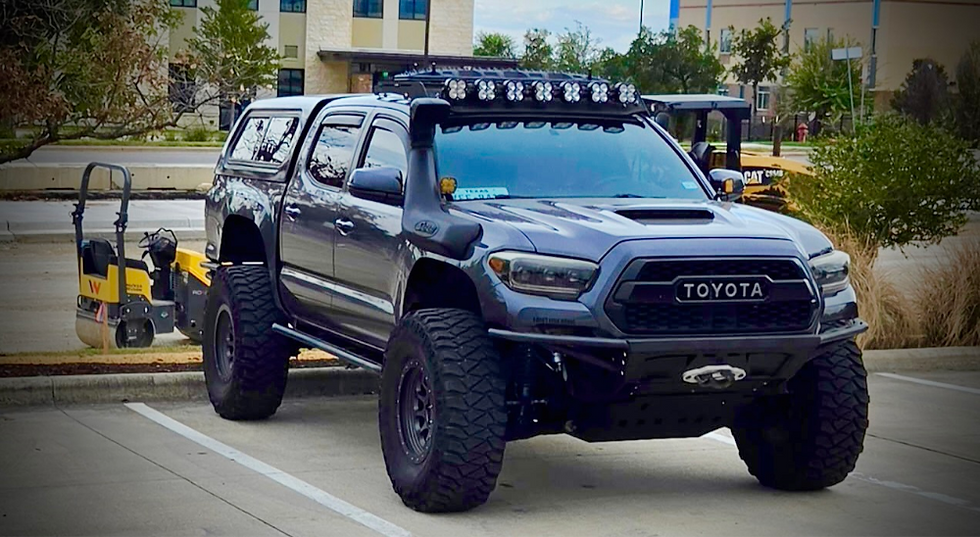
A customer bought a used 3rd Gen Tacoma that came with a set of aftermarket seats already installed. They weren't Toyota, scheel-mann, or PRP seats that we work with but instead they were Corbeau Trail Cat seats, and whoever put them in had cut out everything the airbag system depends on because Corbeau gives new owners little to no guidance. The dash was lit up and the harnesses were a mess/non-existent before he ever drove it home.
He called us, and we walked through everything both seats needed over the phone. His only option was simple: find a way to make the safety systems happy even though the truck's original seats and wiring were long gone, and why we helped him do it.
The Codes
His scan tool showed five current SRS codes. Two of them pointed straight at the missing seat electronics.
DTC | Description | Cause in this truck |
|---|---|---|
B1650 | Occupant Classification System Malfunction | Passenger load cells and OCS wiring missing |
B1653 | Driver Side Seat Position Sensor | Driver seat track sensor missing |
B1800 | Short in D Squib Circuit | Separate issue, not seat related |
B1821 | Open in Side Squib (RH) Circuit | No side airbag in the passenger seat; connector left open |
B1826 | Open in Side Squib (LH) Circuit | No side airbag in the driver seat; connector left open |
The plan was to clear everything except B1800, which needed its own diagnosis. Two of those fixes needed hardware: a donor frame for the passenger side and airbag proxies for both seats. EDIT: we just heard back from the customer and it turns out that the B1800 code was solved with a new clock spring in the steering wheel.
Why You Can't Just Order the Parts
The driver side was the easy half. The seat track driver position sensor (89178-06020)is a normal Toyota part you can buy new or used.

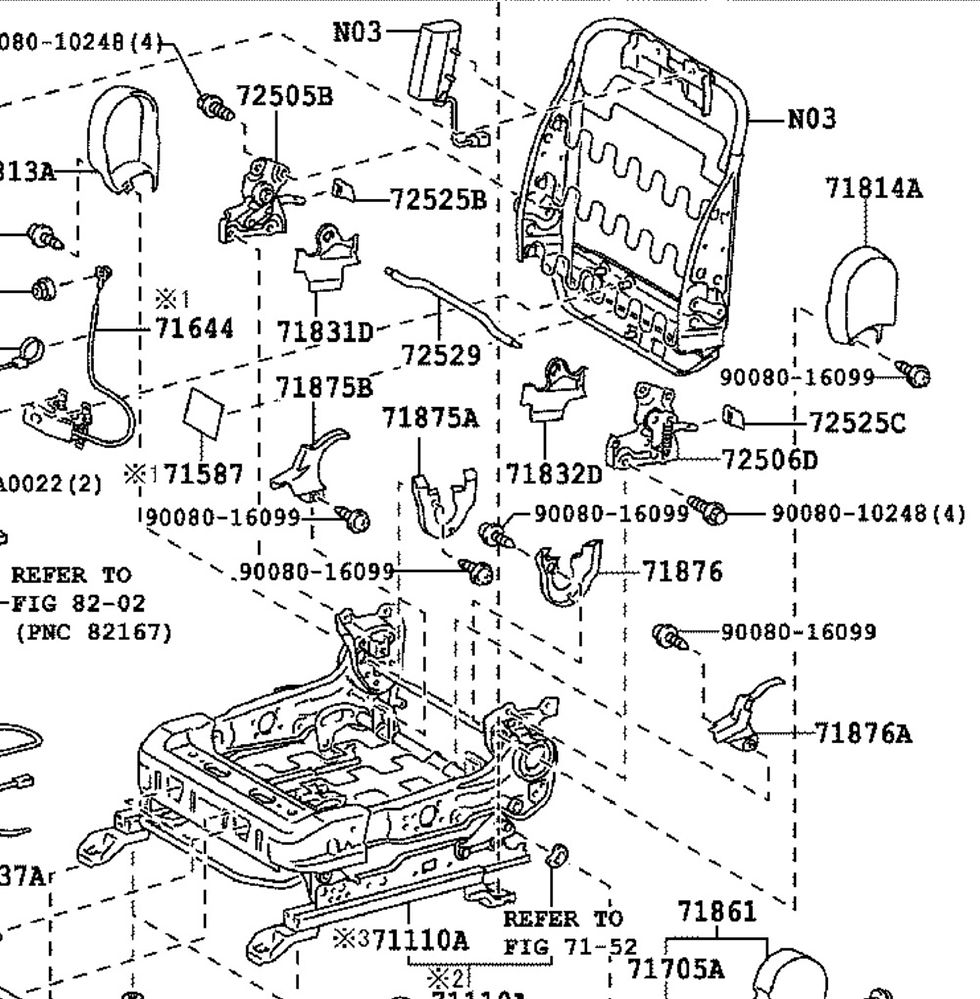
For a quick refresher on what those load cells do, see our write-up on the load-cell array function and why modifying isn't the best idea.
The Fix: Donor Rails
The answer was to buy the parts the only way they're sold: attached to a used seat. He found two listings on eBay.
1. A used driver seat position sensor, listed for 2004-2024 Toyota and Lexus.
2. A 2016-2023 Tacoma passenger lower seat track frame. It carries all four load cells and the OCS computer, which sits under the crossmember.


When the frame arrived, we gave him two rules for pulling the parts:
Remove the seatbelt and its mount, all four load cells, the computer, and the harness as one assembly.
Mark each load cell with its connector so nothing gets swapped on reassembly. This is a big one because each load cell sensor is ID tagged within the OCS computer. Mix up which sensor goes where and the computer will fail the sensors.
Doing the Thing We Say Not to Do

With no seat to mount the load cells in, he secured them with hose clamps. That is exactly the modification our load-cell article warns against, and we told him so. Clamping the cells makes the OCS read a full-size adult in the passenger seat at all times.
Our stance hasn't changed. A clamped array can't tell an adult from a child or an empty seat, so the passenger airbag will deploy at full force no matter who/what is sitting there. When the OEM or aftermarket seat is available, the right answer is a mount that keeps the load cells working as Toyota designed them.
This truck had no seat to go back to. The alternatives were a passenger airbag that stayed off permanently or a truck headed to the scrapyard. Clamped load cells gave him a working passenger airbag for an adult passenger, which made the truck safer to drive than the way he bought it. We'd make the same call again, and we'd still tell everyone else not to.
A few things he saw during setup:
Airbag stayed off at first. Until the clamps were tight enough, the OCS didn't register an occupant. Tightening them brought the passenger airbag on.
There is no on/off switch. He asked if he could toggle the airbag. The answer is no: the clamps stay tight so the airbag is armed in a crash.
Seatbelt reminder stays on. Because the system thinks someone is always sitting there, the passenger belt light stays on until that belt is buckled.
Never put a child or small adult in that seat. With the cells clamped, the system can't suppress or soften the airbag for them. This decision is borne by the customer and its a decision fully discussed.
Closing the Side Airbag Circuits
The Corbeau Trail Cat seats don't have side airbags. Toyota's seats do, and the SRS computer checks each side airbag circuit every time the truck starts. With nothing plugged into the yellow SRS connector under each seat, the computer reads an open circuit and sets B1821 and B1826.
The fix is a Tolerance Stack airbag proxy. It plugs into the yellow connector and presents a 2.2 ohm load, so the computer sees a healthy circuit where the side airbag used to be. Gen3 Tacomas take our Type 2 proxy, one per front seat, so he needed two.
A proxy does not give you side airbag protection. What it does is clear the false codes and turn off the SRS light, so a real fault anywhere else in the system will actually show up. For the full rundown, see Understanding Airbag Proxies.
The Driver Side Curveball
The passenger side was supposed to be the hard part. The driver side sensor turned out to be the surprise.

The eBay position sensor arrived, but it wasn't the right style for the mounting bracket. Its mounting feature was taller than any Toyota seat position sensor we've seen. Rather than wait on another part, he cut and spliced its connector onto the existing wiring under the seat, matching the wire colors, and zip-tied the sensor to the seat. The B1653 code cleared.
The lesson for anyone shopping used: a listing that says "2004-2024 Toyota Lexus" covers a lot of different sensor bodies. Check the mounting style against your bracket before you buy. Our Universal Toyota Driver Position Sensor Mount is built around the late-model sensor, so the right sensor bolts straight in so use the sensor that fits your truck.
Where It Ended Up

The seat position and side airbag codes are gone, the passenger airbag is armed, and a truck that was headed for the junkyard is back on the road. All it took was two used eBay parts, a pair of airbag proxies and a lot of patience.
What we'd want any owner in the same spot to know:
Toyota doesn't sell the load cells alone. A used passenger seat frame from the same truck generation is the only real source.
Harvest the OCS as one assembly. Seatbelt mount, four load cells, computer, and harness stay together, and every sensor gets labeled.
Clamping the load cells is a last resort. It's only worth considering when the seat is gone for good, and that seat should never carry a child or small adult afterward.
Seats without side airbags need proxies. Every open yellow SRS connector needs a proxy matched to the truck, or the side squib codes will never clear.
Verify used sensors before you buy. Mounting styles vary even when the listing says it fits everything.
If your truck still has its seats, or you're putting a scheel-mann or PRP seat in, none of this applies. Use a mount that keeps the load cells doing their job, and give us a call if you're not sure what your truck needs. That's what we're here for.
Full Notice
Tolerance Stack does not recommend clamping or otherwise defeating the passenger load cells, and we don't condone it as a shortcut. Our official stance hasn't changed. Clamped load cells tell the OCS there's always a full-size adult in the seat, so the passenger airbag can't tell the difference when it's a child or a small adult.
We're still sharing this story, because the aftermarket seat community needs it. Swapping seats and working with the SRS is what we do every day, and we know how often trucks change hands with the harnesses cut, the sensors gone and no records. Owners have a right to understand and repair their own vehicles. When the original parts no longer exist, real information beats forum guesswork.
This is one owner's solution to a truck that had no good options left. It is not a recommended procedure. Every truck is different, and your mileage may vary. Anything you do with this information is your decision and at your own risk, and Tolerance Stack accepts no responsibility or liability for the outcome.
If your truck still has its load cells in place, keep them working. That's what our mounts are built for.
#ToleranceStack #Tacoma #TacomaWorld #3rdGenTacoma #Gen3Tacoma #ToyotaTacoma #TacomaNation #TacomaBuild #TacomaLife #Toyota #ToyotaTrucks #SRS #AirbagLight #AirbagProxy #OCS #OccupantClassification #LoadCell #SeatSwap #AftermarketSeats #SeatMount #DIYRepair #AutoElectrical #Overland #OverlandBuild #TruckRepair


Comments